May 11, 2026 | From the Hotel Interactive Newsroom
FORT MYERS, Fla. — Operational clarity is not the product of better dashboards or a longer list of platforms. It comes from preparation, disciplined execution and systems that property-level teams can actually use. That was the message at the center of “From Chaos to Clarity,” a session held April 26-28 during the 2026 BITAC Operations in Fort Myers, Fla.
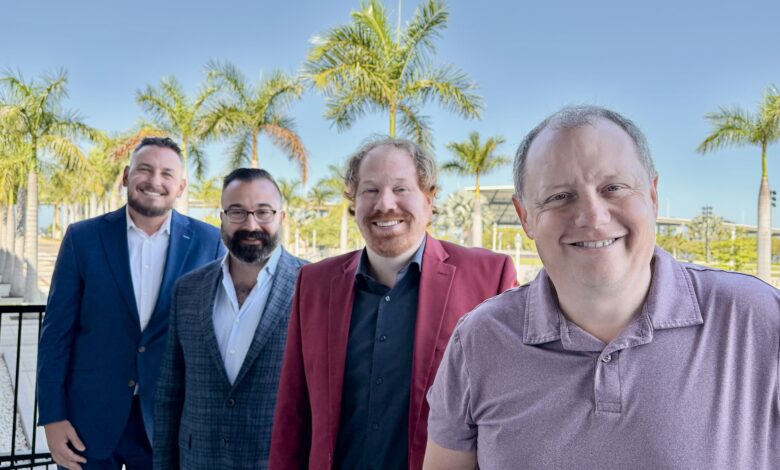
Cody Adent, president of Vibrant Management and a familiar face at BITAC events, moderated the discussion. Joining him on stage were:
- Matt Hughes, chief operating officer of American Hospitality Management, which also oversees 6PM Hospitality;
- Ted Jabara, owner/operator/manager of Meyer Jabara Hotels, a family-owned company with 42 properties in 20 states; and
- Adam Jackson, vice president of hotel operations for Virginia-based Jackson Hotel Management, also a family-owned company.
Start With the Basics
Adent opened by asking each operator to identify one change every hotel operator should consider making in the next 12 months. Jackson brought the conversation immediately to safety and emergency preparedness.
“Probably the most important thing any hotel should understand is the most important thing is the safety of your guests and safety of your employees and safety of the property,” Jackson said.
Beyond security procedures and working locks, he urged operators to document critical property information in a format — such as a standard-operation-procedures manual — that any staff member can access in an emergency.
“The most important thing everyone should do in the next 12 days, much less 12 months, is make sure you have a book or something at your property that explains where all your emergency shutoffs are,” Jackson said. “Your gas shutoff, your electric shutoff, all of that kind of stuff. So, if an emergency happens, you know exactly where to go to turn off that water so your hotel doesn’t get flooded.”
Jabara agreed, and then broadened the point into a larger operating philosophy.
“Preparation, preparation, preparation,” Jabara said. “Stop managing [your hotels] and start engineering them. Look at your process, look at your procedure, digitalize them. Make them transparent; communicate them across the board.”
Standard operating procedures aren’t useful if they sit in a binder on a manager’s desk, out of reach from the people actually doing the work, Jabara said. Operators should democratize those processes and make transparency a priority so that critical information — especially around safety and security — is shared across the entire team, not just reserved for engineers or the general manager.
Hughes offered a different angle, focusing on how corporate leadership can better support general managers. He said as a believer in servant leadership that the most valuable thing an operator can offer a GM is time.
“How do they spend their time? How do I best give them the gift of time?” Hughes said. “Because they have stuff. We have nice towels and nice sheets and all those things, but what we don’t have is time.”
He also cautioned against allowing data and technology to crowd out hospitality’s core purpose.
“I think that sometimes, in a conference like this, we talk a lot about data, but the core essence, we just provide people this place to sleep,” Hughes said. “We need to continue to focus on our core value, which is human connection.”
Build Discipline Around the Tools
From there, Adent moved the discussion to day-to-day performance, asking Jabara what separates high-performing operations teams from the rest.
“It’s not about tools. It’s about discipline around those tools,” Jabara said. “High performers have rhythm and cadence. They have discipline.”
At Meyer Jabara Hotels, general managers are evaluated on three core measures: gross operating profit (GOP), guest satisfaction survey (GSS) and associate satisfaction. Jabara sees the logic behind the triad as straightforward.
“Happy associates make happy guests, and if you don’t have happy owners, you’re not going to be in business,” Jabara said.
Jackson added that the definition of operational excellence is not uniform across the industry: It depends on what a company is actually trying to achieve — whether that’s maximizing guest satisfaction and pursuing brand awards, or prioritizing GOP and running the most efficient, profitable hotel possible.
“I think it truly is a company-to-company decision,” Jackson said.
Start With the Problem, Not the Product
As the conversation moved into technology, Hughes said the most useful tools are those that deliver real-time visibility without adding work for already-stretched GMs.
“I think the tool for me is real-time visibility that brings data to my people,” Hughes said. “If we don’t utilize [the tool], and it’s just a pretty thing that doesn’t serve the greater good.”
The challenge, he said, is designing systems that work for a full spectrum of users, from the veteran hoteliers who came up on paper ledgers to the younger associates who’ve been raised on digital tools.
Jabara added that the most common mistake operators make when evaluating technology is treating it as a standalone decision.
“The biggest mistake that we see when we’re evaluating tech is like doing it in a vacuum,” Jabara said. “It’s always about people and process.”
He explained that he sees the problem as the starting point, not the product. “We are big believers in beta testing,” he said. “Before we roll out a platform or system to our entire organization, we’re happy doing a test pilot.”
And buy-in at the property level is non-negotiable, he said.
“My brother might think it’s a great tool. Our other leaders might think it’s a great tool, but you need buy-in at the property level,” Jabara said. “They have to understand what’s in it for them.”
Jackson said the same principle applies to training the staff on new systems. Without a clear explanation of the benefit, adoption will stall regardless of how good the product is.
“We can fall in love with your product [and] think it’s going to be the greatest thing for us. But if [the staff] don’t buy in, and they don’t realize the value in actually using it, we’re never going to get it anywhere,” Jackson said. “It’s the matter of explaining the why and getting through to them of how that why matters to them, how they’re going to benefit, how their life is going to be easier.”
Jackson also addressed employees who resist change out of long-standing habit. He said operators need to push past the “This is how I’ve always done it” mindset and help employees open up to approaches that are more efficient and allow for professional growth.
Make Data Actionable
When the discussion turned to KPIs, Hughes outlined his priorities around what he called a “holy trinity” of stakeholders: owners, guests and employees. He argued that operators need real-time KPIs that are tied directly to each of those groups and reviewed daily; otherwise, there is a risk of propping up a “house of cards” by over-serving one group while neglecting the others. Without that visibility, he said, leaders can miss early warning signs — such as a GM who has effectively “soft quit” months before formally resigning, despite the ripple effects that role has on dozens of employees.
Hughes went on to explain that with so many properties spread across multiple states, executives can’t rely on their gut feelings or occasional check-ins; they need systems that uncover issues quickly and prevent lowered performance expectations from taking hold.
Jabara built on that point, emphasizing the importance of speed when course corrections are needed.
“Have clear, expected outcomes — measure them,” Jabara said. “Weekly, monthly — evaluate quickly, because you’ll know if you’ve made the right hire … The red flags are there. … But make the decision and then make a correction, and speed wins.”
After unpacking staff adoption and performance KPIs, Adent widened the lens to the systems side, asking Jabara how operators should approach their tech stack. Jabara said the right answer depends on an organization’s capacity to execute — not on what any single platform offers.
“It depends on the complexity of your organization and your capacity to execute,” Jabara said. “We build around a strong core. For us, we need one source of truth.”
At Meyer Jabara Hotels, that means pulling data from PMS, CRM, revenue management and other sources into a unified business intelligence platform — about 400 data interfaces, he said — so GMs can see everything in one place. But he warned that not every company is ready to support that level of integration. Until you have the resources and mindset to maintain a unified platform with strong APIs, he explained, you risk bad data and poor adoption.
“The best tech stack is the one that your team is going to use,” he said. “Complexity can be the enemy. It can be the enemy of adoption.”
Turning Data Into Decisions
That emphasis on integration naturally led into a broader theme: how well hotels are turning all that data into action. Hughes said the gap between hotels that use data and hotels that merely collect it comes down to how that data is presented.
“It has to do with the audience,” Hughes said. General managers don’t have time to decipher complex reports, he said, so information has to be “clear and actionable” and visually intuitive — think obvious color cues and simple arrows — if there’s any hope of the staff using it consistently.
He also pushed back on the assumption that GMs should be data-fluent above all else.
“Great hoteliers are not data scientists, and it’s important to know that,” Hughes said. “Great hoteliers are people that make people feel welcome.”
Jabara added to Hughes’ point, noting the real issue is not volume of data but placement and context.
“Data without context, it’s just noise,” he said. “It’s not how much data. It’s how do you get it in the right place at the right time?”
At Meyer Jabara, making data visible across roles — not just at the leadership level — has been central to driving behavior.
“Everyone knows where the goalposts are,” Jabara said. “Clear expectations can drive behavior.”
A few years ago, he added, senior leaders were spending too much time manually collecting numbers and arguing over their accuracy. As the portfolio grew, the company moved to technology-driven data normalization and direct interfaces, freeing meetings to focus less on whether the data was right and more on what to do about it.
Building for the Next Generation
An audience question at the close turned the panel toward legacy. For Jabara and Jackson, both third-generation operators, the question of whether the next generation will carry the business forward was personal.
Jabara said the answer came from a decision that the family made together.
“We sat down a few years ago — my father and our partner and my brother and I — and we said, ‘What do we want to do?’ ” Jabara said. “And we decided that we wanted to build a company for the next generation.”
His brother’s children, he joked, are already “working” at the hotels at ages 2 and 4.
For Jackson, the goal is just as clear, even if the timeline is still ahead of him.
“I would love to — currently, we don’t have that fourth generation. None of us have kids yet — so I’d love to do that. Until then, change the world, leave a legacy.”
***
Interested in speaking at a future event? To learn more about speaking opportunities, connect with the BITAC team here.
Follow BITAC Events on LinkedIn, Instagram and TikTok for event updates and highlights.