BITAC Food & Beverage 2026: Creating the Restaurant Experience in the Burgeoning Upscale Hospitality Sector
By Jacqui Barrineau | February 26, 2026
In today’s luxury hotels, the real money isn’t just in the room rate: It’s in everything that guests do once they walk off the elevator. As the sector continues to outperform, operators are designing guest experiences that increase the total revenue per occupied room. That means carefully curating F&B experiences that include world-class bars, destination restaurants and membership clubs, all of which turn richer guest stays into richer returns.
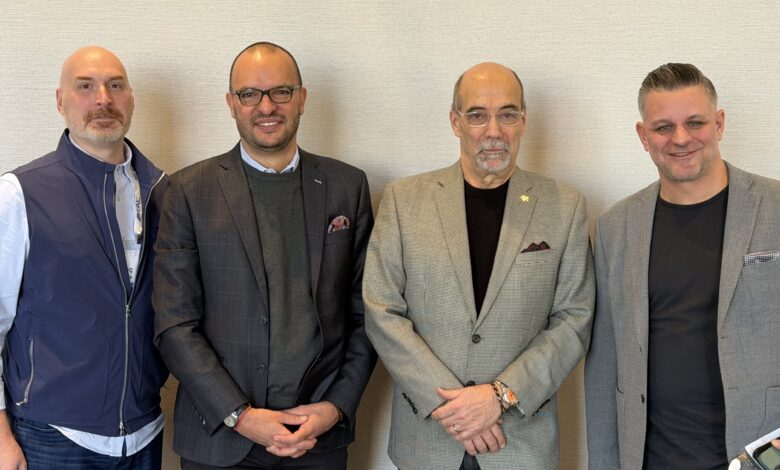
During the recent BITAC® Food & Beverage 2026, a panel of industry experts shared their insights on how to turn guest experience into a deliberate revenue strategy. The discussion brought together Richard Garcia, senior vice president at Crescent Hotels & Resorts and head of the Crescent Restaurant Group; Greg Griffie, who leads the Davidson Restaurant Group at Davidson Hospitality Group; and Andres Jimenez of Makeready, a luxury lifestyle management company built around F&B‑driven hotels, independent restaurants and member clubs. Nick Bellini, an industry veteran whose background includes work with Forbes Travel Guide, moderated the session.
With portfolios that span independent lifestyle hotels, destination restaurants, and emerging member clubs, these executives have real-world experiences of how, and where, luxury guest experiences are translating most directly into new revenue.
New Math: From RevPAR to Total Revenue Per Occupied Room
For Davidson’s Griffie, the link between experience and revenue starts with changing the way performance is measured. Traditional benchmarks, such as occupancy, average daily rate (ADR) and revenue per available room (RevPAR), are still important, but they only capture what happens in the guestroom. Griffie says the more interesting story, especially in the upper-upscale and luxury tiers, is what happens once that guest walks downstairs.
“We measure total revenue per occupied room (TRevPOR),” Griffie explained. “That way, we’re really capturing all the revenue from anyone outside the hotel that’s eating in our restaurants, that’s spending money at bars, at our pizza shops, at our coffee shops, whatever that may be.”
Griffie says instead of treating restaurants, bars and on-property experiences as the usual amenities, Davidson is effectively treating them as revenue engines. And the shift isn’t just theoretical: Davidson ties compensation to it.
“This year in particular, we’ve bonused all operations managers off of total revenue per occupied room, which is a bit of a different metric,” Griffie said. By bonusing against TRevPOR, the company is incentivizing its teams to think about how to draw guests — and locals — into their spaces, capture more of their spend on site, and design experiences that keep visitors engaged with the property.
That approach is powerful at the upper end of the market, where guests are willing to pay for service, connection and a sense of being looked after. That’s especially true in today’s world where smartphones connect us but also isolate us.
“I think why upper upscale and luxury is a real thing is because these devices. We’ve lost service. We’ve lost connection,” Griffie noted. “So, people [at] that upper upscale, luxury tier [want] to be catered to. You’re getting real service. You’re getting real experiences . . . If [hospitality operators] can dial up that service and personal connection, you will have a customer for life.”
With that perspective, experience becomes a quantifiable business strategy. By redefining success around TRevPOR and aligning bonuses with that metric, Davidson is turning every point of the guest journey, from morning coffee to late-night cocktails, into part of a deliberate revenue plan. And in the luxury space, where guests are actively seeking richer experiences and have the willingness to spend for them, that shift in math can change a property’s performance.
Banking on Bar Business: Building a Destination F&B Strategy
As Davidson redefines how experience gets measured, Crescent Hotels & Resorts shows what that looks like in bricks, mortar and bar programs. For Richard Garcia at Crescent, the luxury and upper-upscale opportunity is increasingly global; it is also anchored by standout food-and-beverage concepts. On that front, Garcia says Crescent has moved aggressively.
“We actually have signed an agreement where we are going to be managing for Minor Hotels in the United States. In fact, we already are,” Garcia said.
Minor Hotels, a major international group, owns multiple brands including the NH flag in Europe, which plays squarely in the upper-upscale and luxury tiers. Crescent currently manages the NH Collection Madison Avenue in New York and is renovating another Minor property in the city.
“They actually have the number one bar in the world in one of their hotels,” Garcia added, “and we’re working on putting their first outpost in the United States. That’s a major opportunity for us, because it’s an opportunity to dive into brands that the United States doesn’t know.”
A globally recognized bar concept is a revenue strategy that can draw locals and travelers beyond the in-house guest list, which then pushes check averages and lifts the TRevPOR. Even so, Garcia is candid that Crescent had to put in a lot of hard work before it could fully capitalize on such opportunities.
“F&B at Crescent was not in a position where they could confidently sit in front of an ownership group and say, ‘Hey, this is what we’re going to do with our restaurants, with our bars,’ ” he said. Since joining Crescent, his mandate has been to change that. “I’ve kind of been given the green light to build the team as needed. We’re putting the right people in the right places, and we can coach them on the hotel side.”
That has meant recruiting top restaurant and bar talent who think like independent operators, even when they are working for a global brand. To illustrate how that approach translates into performance, Garcia points to a series of projects: a Best Restaurant in America James Beard nomination, one of Crescent’s Santa Monica bars named to a “top 10 bars in LA” list, and a major conversion at SoFi Stadium.
“We’re currently under construction at the Hotel Cali, the newest hotel at SoFi Stadium, with seven different outlets, and almost $20 million in F&B revenue,” he said. “We’re really putting this focus on not just driving the hotel guest but ensuring that whether we are in a branded hotel or an independent hotel in New York City, there is a reason for people to want to either stay in the hotel — or come to the hotel.”
Garcia also offered a real-world example of how guest experience can move the needle even at a less obvious place: a TownePlace Suites in Windsor, Canada. There, an owner asked for something that sounded more like a luxury play than a limited-service staple.
“He says, ‘Oh, by the way, I need an amaro and a bourbon bar in this place,’ ” Garcia recalled. Crescent budgeted the concept to do just under half a million dollars in annual revenue and sent in its team to train staff to the standards of a high-end property.
“We sent in our team to train them like they were being trained at the Saint Anthony Luxury Collection,” Garcia said. “We will probably end the year over a million dollars . . . The TownePlace Suites in Windsor, Canada, is driving an experience that you can’t get anywhere in that town — an $89 rate and a $29 cocktail — and it’s working just fine.”
Across markets and concepts, the throughline is the same: treat F&B as a destination, staff it with specialists, and design it to attract far more than in-house guests. For Crescent, those choices are turning the abstract idea of “enhanced guest experience” into concrete, high-margin revenue streams that support both global luxury partnerships and strong returns in more modest segments.
Designing With Intent: Makeready’s Experience-First Ecosystem
Where Davidson rewrites the metrics and Crescent scales destination F&B, Makeready is focused on the groundwork that makes strategies sustainable: designing hotels and restaurants so intentionally that the experience almost sells itself. Andres Jimenez, who oversees F&B and concept development at Makeready, says that meant resisting the urge to grow too quickly.
“We decided that before we went out and grew exponentially, we needed to figure [things] out, because at the end of the day, you only have one shot of creating a name for yourself,” he said.
Jimenez explains that in the company’s early years, “figuring it out” translated into a deliberate period of refinement: tuning operations, service and brand identity before chasing scale. The goal wasn’t just to open more properties; it was to build a reputation for managing assets that maximize guest satisfaction and long-term value.
A big part of that is how Makeready approaches design. Jimenez describes a process that revises plans many times before anyone signs off.
“Everything we do is designed with intent, even if it comes at a cost of the project,” he said. “We go three, four, five times revising a plan, revising a design, until it’s absolutely perfect. And by perfect, I don’t necessarily mean luxury perfect. It means it feels good. The light is good. You go there and you have the vibe.”
In other words, the measure of success is how a space supports the kind of social, F&B-led experiences that keep guests — and locals — coming back.
Like his fellow panelists, Jimenez also sees food and beverage as a credibility test. In addition to Makeready managing hotel restaurants, it also operates independent concepts in the open market.
“We created, as well, a second, a new pillar for restaurants. We opened two independent restaurants back in ‘24 and [there is] another one that we are continuing to grow,” he said. “We feel that if we are going to be a management company that speaks the language of food and beverage within a hotel, you have to have the goods to prove it.”
Jimenez says those standalone brands serve as both a laboratory and a calling card, showing owners and guests alike that Makeready’s F&B ambitions are more than marketing.
Makeready is now applying that approach at a larger scale. The company is on track to double in size over the next three years, anchored by what Jimenez calls a “multi-vertical neighborhood” project in Columbus, Ohio. It’s Makeready’s first true luxury property of that type.
“Now we have hotels, we have restaurants, we have member clubs, and we have a new pillar, as well with Sasa Hotels in Texas,” he said. “So, [we have] tremendous growth in multiple different pillars, which is pretty exciting.” The model layers hotel rooms, independent restaurants, and member clubs, creating an ecosystem where guests, diners, and members circulate between experiences and revenue streams over the course of a day — or even a year.
Underneath the Makeready growth story is a view of hospitality that extends beyond the luxury tier. Jimenez argues that many of the service “touches” that define a great stay at the top end —such as remembering guest names, personal preferences, small gestures that make people feel known — can and should show up in more modest segments as well.
“I’m a true believer that [service level] is not exclusive to luxury. It’s expected,” he told the audience. “Little touches don’t cost. It’s only about the effort of training that really can … [which can] make a huge difference if you put your head to it.”
For Makeready, that blend of painstaking design, independent F&B credibility, and multi-vertical development is all in service of the same goal: creating places where people want to spend time—and by extension, money. In a luxury landscape where experience is increasingly the differentiator, Jimenez’s approach suggests that the most durable revenue models start with getting the fundamentals of how a space feels exactly right.
Three Paths, One Playbook
Together, the three executives sketched a common playbook for luxury growth: measure the right things, design intentionally for how guests spend their time, and be unapologetically serious about food and beverage. Griffie anchors Davidson’s strategy in total revenue per occupied room, bonusing managers on what guests spend in restaurants, bars and activities outside the guestroom. Garcia shows what that looks like on the ground, from a forthcoming SoFi Stadium hotel with seven outlets and nearly $20 million in projected F&B revenue to a TownePlace Suites in Windsor, Canada, where an elevated bourbon and amaro bar is on track to double its original revenue forecast. Jimenez, meanwhile, argues that those results start much earlier in the process: with the patience to revise a plan “three, four, five times” until the light, flow, and vibe feel right, and with the conviction to build independent restaurants and member clubs alongside rooms. Different models, same conclusion: When experience is designed and managed as a revenue engine, the luxury tier is where it pays off fastest.
As the session came to an end, an audience question about Gen Z gave the panel a chance to expand on how evolving guest behavior reinforces the tie between experience and revenue. Garcia pointed out that younger travelers may be drinking less overall, but they’re gravitating toward fewer, better drinks and other choices driven by wellness trends popular on social media. Building on that point, Jimenez argued that non-alcoholic cocktails deserve the same level of craft and pricing as their boozy counterparts. Griffie rounded out the discussion describing a broader “premiumization” trend, where even kids’ poolside orders are being reimagined: Three root beers can turn into three $14 bobas that boost the family’s total check. Those carefully designed offerings turn personalized preferences into higher spend per guest.
In the luxury and upper-upscale tiers, customer experience is now crucial to the business model; it is not a bonus. It shouldn’t be an afterthought. As midmarket concepts struggle and travelers become more selective, brands that treat experience as their main revenue engine are the ones most likely to lead the next chapter of hospitality.



Get involved!
Comments