May 5, 2026 | From the Hotel Interactive Newsroom
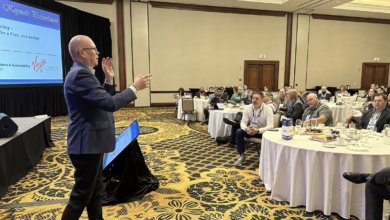
FORT MYERS, Fla. — Procurement in hospitality has moved well past the era of the handshake deal on the golf course. At BITAC Operations, held April 26-28 in Fort Myers, Fla., the session “Redefining the Role of Procurement” brought together a panel of hospitality veterans who made the case that procurement has earned a strategic seat at the table, ushered in by data, technology and operational partnerships.
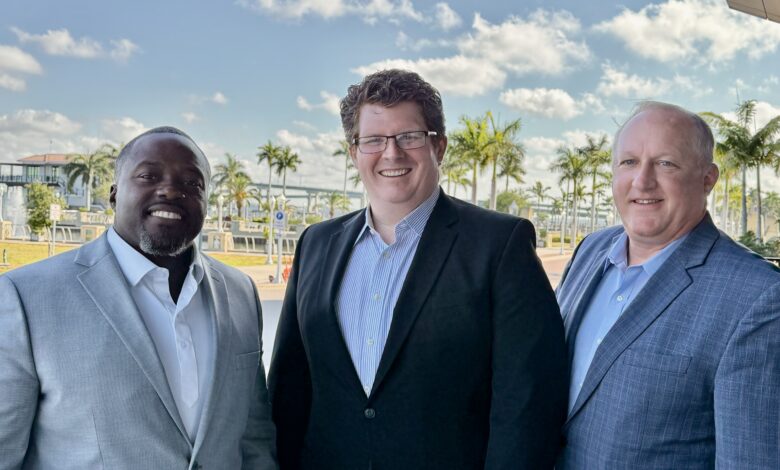
Leading the discussion was Adam Butts, senior vice president of procurement for Crescent Hotels and Resorts, who was joined by Clay Snyder, senior director, Hilton Supply Management, and Ethan Wheat, asset manager, Westmont Hospitality Group Inc. In a wide-ranging discussion, the three covered the evolution of the procurement function, the persistent challenge of compliance, the growing role of AI in procure-to-pay systems, and the value of group purchasing organizations.
From the Back Office to the Boardroom
Butts opened by positioning procurement as a function that has evolved as hotel companies look beyond basic cost control.
“It really went from this back-house-in-the-dungeon area of a hotel corporate office to now moving towards the front,” he said, describing a shift from reactive cost management to a strategic function aligned with organizational goals.
That shift has been driven by data, the panelists said. Snyder said data remains central to procurement decision-making, even as technology continues to evolve.
“Data does drive the right decisions,” he said. “Yes, it’s about price; it’s about the cost of the products you’re purchasing. It’s about the flow through … but it’s also about the service and the ability to get that information in front of each of our partners.
“An account manager from a procurement organization is super critical to help make those decisions and drive that through,” he concluded.
For Wheat, the practical impact has been immediate on the operations side. Before real-time tracking, he said, his team was reviewing spend reports six weeks after the fact, or depending on individuals to self-report accurately. “Now, with the ability to track it more real time, it’s been a game changer for us, and keeping track of expenses before they actually become expenses.”
Butts added that real-time data has also shifted the power dynamic in vendor negotiations. “Before it was more of a handshake,” he said. “We go play golf, and we might sign a contract. Now, with all the data that’s available, we can really make conscientious decisions about what makes sense for the company.”
The Operations Partnership – and One-Click Orders
The session shifted to focus on a common challenge: getting property-level teams to actually use the procurement programs built for them. Amazon came up repeatedly as both symbol and symptom of the problem: It is fast, easy and nearly impossible to monitor after the fact. Snyder acknowledged the behavioral challenge, comparing off-program purchasing to the instinct of ordering a single gallon of milk for same-day delivery rather than waiting for a consolidated order. The solution, he said, is not just policy but design: “Coming up with the inventory systems and the protocol to make that one drop much more efficient.”
Wheat said Westmont’s approach has centered on directing purchasing through approved order portals and systems — and removing the incentive to go off-program in the first place. The goal is to simplify the process “to the point where somebody wouldn’t want to not do what you’re asking them to do,” Wheat said. “It’s much easier to take the proper route.”
When deviations do occur, Wheat said his team traces them back through the approval chain and sometimes discovers a legitimate gap in the supply chain that warrants adding a new vendor.
Butts emphasized the importance of pulling regional leadership into the compliance equation. “The regional teams really making sure they understand what procurement brings to the table — because they have the oversight over the operations team.”
Snyder added that gamification has been an effective tool in driving regional engagement. “Ensur[e] your regional teams have a challenge against them — who’s performing the best, whose compliance is the most,” he said. “It’s a great opportunity to gamify it a little bit and reward it.”
The panel walked through how compliance is quantified in practice. At Hilton Supply Management, Snyder said the organization measures against 10 to 12 core suppliers, with a target of 70 to 80% on-program spend. Top-performing properties approach 90%. The metric used is spend per available room through the program, which he said averages approximately $170 per available room per month across the portfolio.
At Westmont, Wheat said the emphasis is on directing all purchasing traffic through approved order portals and standard operating procedures, making it structurally difficult to circumvent the system.
Butts acknowledged that even strong compliance programs have blind spots. “I can tell where they’re buying from as far as the vendor itself,” he said, “but contractually, I don’t know if they’re buying all the right products. So, they may buy from US Foods. Well, how do I know they’re buying the right product from US Foods?” He described this as “the gap in compliance that we have right now.”
AI Enters the Picture
The panel revisited procurement systems’ shift from manual processes to procure-to-pay platforms, and eventually moved on to the topic of AI-assisted tools, which are beginning to automate some of the most time-consuming elements of the work. While the procure-to-pay platforms brought structure and visibility to that process, AI, the panelists said, is poised to take it further.
Wheat described one concrete application already in use at Westmont: AI-assisted invoice coding. “We just upload the invoices, it recognizes the item, and it will put the coding systems onto it already from the start,” he said. “That system being able to recognize it and just apply codes automatically to the final invoice that goes off to accounting has been a fantastic change.”
Butts outlined three AI capabilities he sees as most promising: forecast-driven purchase-order generation; automated receiving through uploaded invoice or packing slips; and line-item data capture that can uncover off-contract vendor spend. “If there’s a vendor that we don’t have a contract with, [and] if we’re spending enough, [then] maybe I need to go get a contract with that particular vendor,” he said. “AI to me is really changing the game when it comes to procure-to-pay.”
Snyder added that AI could also help recover quick-pay incentives that currently fall through the cracks — discounts of 1 to 2% that depend on timely invoice submission and are frequently missed at the property level. “It’ll continue to help make sure you’re hitting those guidelines and not relying on a property accounting manager or controller to make sure they’re submitting the invoices on time.”
The GPO Advantage
On the value of group purchasing organizations (GPOs), the panelists were candid. Snyder acknowledged upfront that GPOs create friction for suppliers — “there are a lot of hoops to jump through” — but he made a strong case for the work they absorb on behalf of customers. Beyond pricing, Snyder pointed to the behind-the-scenes contract management GPOs provide: negotiating fuel surcharges, managing indemnification language and maintaining supplier relationships across categories. “There’s a team of about 200 people behind the scenes,” he said, “whether it’s with our company or Integra or Vendra or anybody else, so they’re doing a lot of the legwork behind the scenes, so you don’t have to worry about that.”
For management companies specifically, Snyder positioned GPO participation as a competitive differentiator in pitching new business. “We want to be there side by side with you, making sure that we’re part of your value proposition when you’re pitching a new deal or a new property or a new portfolio,” he said. “We’re in this together. We want to grow together.”
Finance vs. Operations: Where Does Procurement Live?
In Q&A, an audience member asked whether procurement is better positioned within finance or operations — a structural decision with real strategic implications.
Butts, who has reported under both, said he prefers operations for the alignment it creates, but noted that a finance reporting line has its own advantages: It creates a direct link between compliance data and bottom-line performance. “If I have a hotel that’s not performing, I can say one of the reasons is your compliance level,” he said. “They’re making money up top, but it’s not coming to the bottom. Their compliance is typically off.”
Meanwhile, Wheat offered a practical summary: “Between the two, you’re gonna get to the same point. It’s just in one side, the red flags come from what shows up, and [on] the other side, red flags come from what gets purchased.”
The Bottom Line: Guest First
The session closed with a question about how procurement measures intangibles — the value that doesn’t show up on a cost report. Snyder pointed to account management and supplier relationships as forces that shape the guest experience in ways that can’t be easily quantified. “The intangible also is the service you receive,” Snyder said. “It’s having the account managers. It’s the right supplier relationships … That intangible of account management and relationship building is behind the scenes.”
Butts said procurement still has to connect back to the guest and procurement decisions have to serve both guests and owners.
“The guest experience is everything,” he said. “Everything we do in hospitality is based on the guest experience. My number one focus is the guests, and number two is my owners.”
***
Interested in speaking at a future event? To learn more about speaking opportunities, connect with the BITAC team here.
Follow BITAC Events on LinkedIn, Instagram and TikTok for event updates and highlights.