April 20, 2026 | From the Hotel Interactive Newsroom
It’s hard to believe that it’s been six years since the COVID-19 pandemic upended nearly every aspect of our lives — how we socialize, how we work, how we travel, how we do business. As the 2026 BITAC® Sales, Marketing & Revenue Management Summit opened Day 2, a panel of hospitality executives reflected on the lessons of resilience learned from the pandemic era and the role that resilience will play during a period of growing economic uncertainty and beyond.
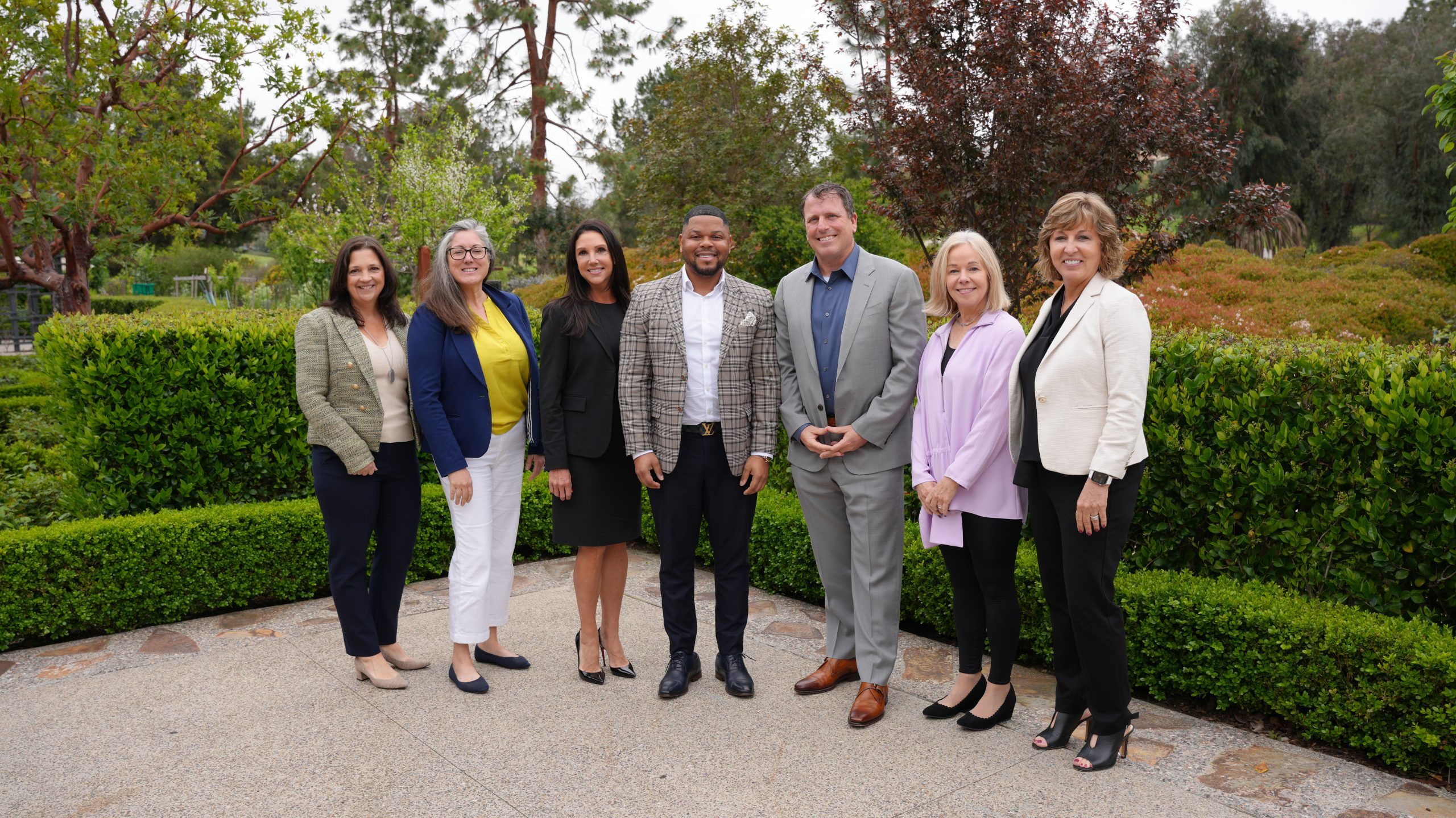
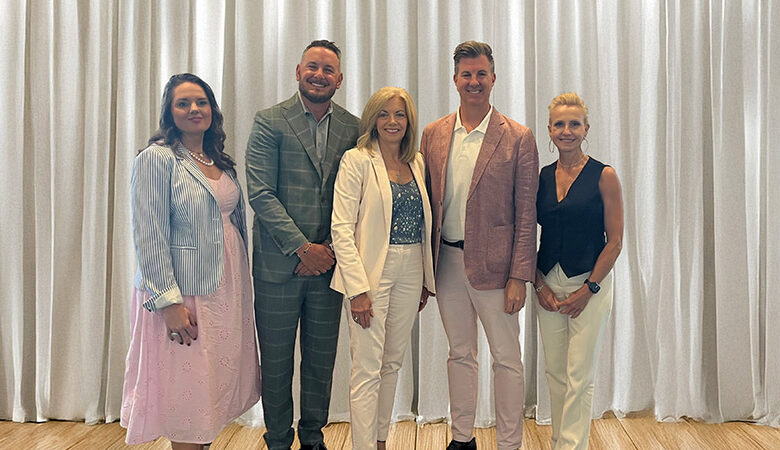
Titled “Light at the End of the Tunnel,” the session was moderated by Lovell Casiero, CEO of FLC Business Consulting. Casiero, a familiar face at BITAC events, deftly moved the conversation through pandemic-era survival stories, shifts in operational and technological shifts, and a candid assessment of what the industry is navigating now. Joining her on stage were:
- Cody Adent, president, Vibrant Management
- Heather Fields, senior vice president of commercial strategy, Reliance Hospitality
- Brent Hayhurst, vice president of program development, Curator Hotel and Resort Collection
- Angela Vaughn, vice president, Miles Partnership
Casiero opened with a deliberate look backward — six years to the spring of 2020 — before turning to the present and the road ahead. As the panelists recalled facing – and managing – the unexpected challenges that surfaced during lockdown, they also presented a working framework for how resilience is built, tested and put to use again.
Back to 2020
To kick off the discussion, Casiero offered a pointed reminder of what the industry had weathered. In April 2020, STR reported the hospitality’s lowest occupancy on record at 24.5%. The industry, she noted, was “the hardest hit and fastest industry to go down.” Against that backdrop, she asked the panel: What was the worst thing about the pandemic you experienced?
For Adent, the answer came down to a single date. Vibrant Management had spent two to three years converting a longtime family-owned hotel near Zion National Park to the Curio Collection by Hilton. Everything was set to go live on March 13, 2020.
“We had literally put all of our blood, sweat and tears into making this thing happen,” Adent said. “And as the airplane was about to take off from the runway, our whole world came to an end.”
On the first official day as a Hilton property, the team had to inform staff that their jobs existed — but their paychecks did not, at least not yet. “In that moment,” Adent said, “it felt like we were literally going to lose everything.”
Fields described a different kind of compounding pressure. As properties across her portfolio struggled to stay operational, deferred maintenance became impossible to ignore.
“We had elevators breaking down. We had HVAC issues, cooling towers,” she said. “So we had a lot of customer complaints, group cancellations and a lot of, you know, just horrible guest scores.”
For Hayhurst, the defining challenge was human. “It was the labor issue,” he said. “It was the impact on the people.” Owners and operators found themselves doing something unprecedented: shutting buildings down and then figuring out what that meant for the people left to execute it and the ones who had been sent home with little reassurance about the future.
Vaughn described watching all 60 properties that she and her team were working with shutter in just 15 days. Even so, the same speed that marked the shutdown also characterized the resurgence. “Within 30 to 45 days, all 60 reopen,” she said, “which created a completely different type of demand and compression and operational challenges for those who had shuttered their doors.”
The Tsunami After the Storm
When the world began to open up again, Casiero recalled, the recovery came fast — even faster than the post-2008 rebound. And the industry was not ready for it. The U.S. Bureau of Labor Statistics estimated 8.2 million hospitality workers were let go during the pandemic, and a significant portion did not return. Demand resurged before the staffing did and brought with it a new slate of challenges and lessons.
Survival wasn’t going to depend on any single strategy. Rather, the industry’s resilience was going to take many forms in new approaches and attitudes. For Adent and his team, adaptability was crucial. He recalled the advantage of having already invested in virtual operations technology before the pandemic hit; the smart locks and remote management systems proved immediately essential. “We were so fortunate to already have that in place,” he said. “We learned that there’s always a solution, if you’re willing to look.”
Hayhurst cited the collaboration that emerged when traditional roles dissolved. “GMs making beds or a hostess managing short-order-cook orders,” he said. “Everyone really stepped in.”
Fields described an equally durable lesson. “We’re all people, and we’re all there to help each other,” she said, “and we all understood that if we just worked together and we had each other’s backs and we really just processed through everything that we were doing … we really learned a lot about each other.”
Vaughn looked at the outcome in broader terms. “It definitely created a new sense of resiliency across the entire hospitality community,” she said. “And I use the word ‘community’ very purposely, because this community rallies together no matter what your role, no matter what your tenure, no matter what your experience, to truly help one another out.”
Technology’s Lasting Footprint
From necessity came adoption, and from adoption came lasting structural change. Adent pointed out that the pandemic normalized digital communication in ways that irrevocably changed how management companies operate. Tools such as Canary — which enables text communication with guests before, during and after a stay — were no longer optional; they had become essential. And as everyone became more comfortable with using Zoom and Google Meet in 2020, it became possible for management teams to serve clients across the country without the cost and time of constant travel.
Fields, whose work sits more in the project management space, said the technology gains were equally tangible for her team. The tools available today have allowed Reliance Hospitality to build programs and processes faster, communicate with clients more quickly and deliver project data in a way that simply wasn’t possible before. “It’s really allowed us to streamline everything,” she said.
Hayhurst recalled that the Curator Hotel and Resort Collection launched in November 2020, in the thick of the pandemic. The pandemic, he said, had accelerated a broader openness in the vendor community to API integration and interoperability, marking a shift away from closed technology ecosystems and toward solutions that are built around the hotel’s needs rather than a single tech stack.
“Putting technology — finally — at the forefront of the industry,” he said, has been a meaningful and lasting change.
The Compressed Booking Window
While Vaughn acknowledged the impact of technology on operations, she said the biggest change she and her teams have seen is in traveler behavior — specifically the dramatic compression of the booking window. Vaughn said she sees demand now concentrated inside 30 days, which she says creates an operational and forecast challenge.
“The traveler confidence isn’t where it used to be, prior to 2020,” she said. The properties that are winning, she said, are those that have their technology and operational infrastructure in place and are actively watching trends to pull the right levers for in-the-month-for-the-month demand.
Vaughn also identified a key structural shift in how high-performing properties are operating today: regular collaboration between sales, revenue management, marketing and operations — at minimum weekly — to assess challenges, spot trends and coordinate responses across functions.
What’s Coming
The conversation turned to the present and near future, and the picture was not uncomplicated. Casiero noted that both LARC Analytics and STR are projecting RevPAR growth of just 0.6% for 2026, down from earlier projections of 1.4%. At the time of this writing, FIFA World Cup activity has not generated the demand compression that many had anticipated. Geopolitical uncertainty, natural disasters and sustained cost pressure are bearing down on the industry heading into the rest of 2026.
Asked what they anticipated as the next major disruption, Hayhurst offered a sober read on the current operating environment.
“We’re in this period of what we’ve been saying is ‘industry recovery,’ but I don’t think we’ve even hit a full cycle yet,” he said. “The catastrophes … the major changes are coming at much shorter pace now. … Now we’re dealing with a lot of geopolitical pressures. We have natural disasters … There always seems to be something that’s disrupting.”
Daylight, a Train or a Lighthouse
Casiero closed the session with the question embedded in the session title: Is the light at the end of the tunnel daylight or a train?
Vaughn went first: It is daylight. Even so, she pushed for a more fundamental reframing of how the industry thinks about its own trajectory.
“If we, as an industry, stop using the word ‘recovery’ and start thinking about it [as] ‘recalibration,’ that changes our mindset,” she said. “Let’s wipe the slate clean. Let’s recalibrate and think about how we as an industry are looking at success, and how we are going to own our own daylight.”
Hayhurst took the counterpoint but with a twist. “It’s definitely a train. But I would say that those of us in this room … we’ve already purchased the advance ticket. So, we’re on the platform. We’re ready. We’re the change makers.”
Fields acknowledged the uncertainty while pointing toward what she sees as the industry’s best available tool. “If we really lean into the technology that’s provided for us … AI, everything — [if] we lean into it … let us really learn from it and take advantage of what it’s going to do for us,” then the industry will continue to move forward.
Adent offered the session’s final image, stepping back from the binary of the original question to reframe it entirely.
“The light is like a lighthouse,” he said, “and so a lighthouse is a beacon of direction, and if it wasn’t there, you could wreck into the rocks. But as long as you’re staying present and you’re following the trends and following the direction that the light indicates, then it’s all going to be all right.”
***
Interested in speaking at a future event? To learn more about speaking opportunities, connect with the BITAC team here.
Follow BITAC Events on LinkedIn, Instagram and TikTok for event updates and highlights.