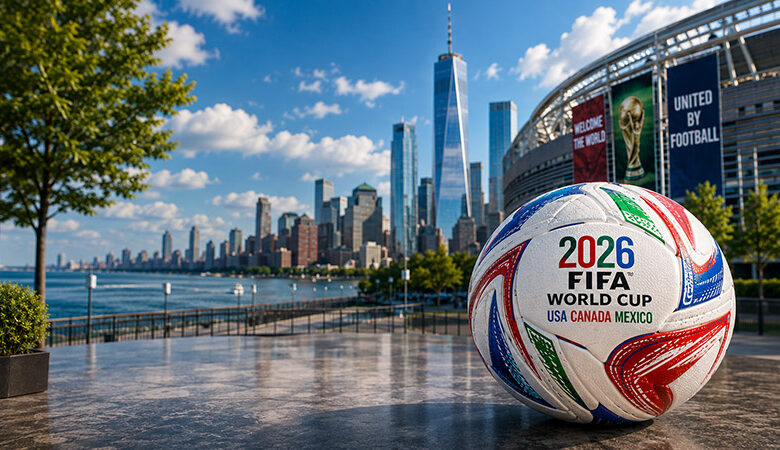
Report: Anticipated World Cup Boom May Fall Short of Expectations
By the Hotel Interactive Newsroom | May 18, 2026
Two months ahead of the 2026 FIFA World Cup, a new report by American Hotel & Lodging Association (AHLA) shows hotel bookings are tracking below industry expectations.
“A range of factors have tempered early optimism, though forward indicators show there is still meaningful opportunity ahead,” Rosanna Maietta, president and CEO of AHLA, said in the news release announcing the report. “To fully realize that potential, the U.S. and FIFA must ensure a welcoming and seamless experience for international travelers.”
Hotel owners and operators across the 11 host markets were surveyed April 7-21 for the AHLA U.S. Hotel Outlook: 2026 FIFA World Cup. Nearly 80% of the respondents reported that booking pace is tracking below initial forecasts. Among the factors contributing to the softened demand: visa barriers, rising travel costs and room-block cancellations by FIFA.
Those cancellations reflect a structural problem with how early demand was measured: FIFA room blocks locked up large pools of inventory months in advance, which concealed softer underlying demand. As FIFA canceled and released those blocks — approximately 70% of its group blocks across host cities — rates have come under pressure and host-city hotels are scrambling to backfill.
Compounding those challenges, some host markets are facing last-minute tax increases. New Jersey has proposed raising its lodging tax from 5.0% to 7.5%, while Philadelphia faces a proposal to increase its hotel tax from 8.5% to 10.5%. The AHLA estimates the Philadelphia increase alone could cost the market 1,900 jobs and $154 million in economic activity.
AHLA’s findings also reveal a fundamental disparity. Although FIFA reports more than 5 million World Cup tickets have already been sold, the seats may be filled largely by domestic fans rather than the higher-spending international visitors that the industry was counting on. According to research released in April by the U.S. Travel Association, international World Cup visitors are expected to spend roughly $5,048 per person — about 1.7 times more than the typical international visitor to the U.S. They are also more likely to extend their stays by weeks and to additional cities, thus broadening their economic activity.
Market by Market
Just weeks away from the start of the world’s most widely anticipated sporting event, the AHLA survey paints an uneven picture across the 11 host markets and a broadly disappointing outlook.
With 85% to 90% of respondents reporting booking pace below expectations and lower than a typical June or July, Kansas City is the most negatively impacted market. Some properties reported FIFA’s room-block cancellations affecting 70% to 95% of originally contracted inventory.
Meanwhile, the markets in Boston, Philadelphia, San Francisco and Seattle show similarly limited impact. Nearly 80% of respondents reported a below-expectation booking pace and many described the tournament as a “non-event.”
The situation is brighter in Atlanta and Miami, where roughly 50% and 55% of respondents, respectively, reported booking pace in line with or ahead of expectations. In Atlanta, the demand is driven by team base camps, Atlanta’s major airport hub and a broader mix of visitors. Miami’s momentum is tied to the market’s ability to capture World Cup-related leisure demand, helping offset weaker international travel traffic.
In New York City, roughly two-thirds of respondents report softer-than-expected bookings, though most are tracking in line with normal summer demand. More than 60% of operators there cite international travel barriers and geopolitical concerns as contributing factors.
Dallas and Houston tell a similar story. About 70% of respondents in each market report booking pace below earlier expectations, but it’s still generally consistent with a typical June or July, suggesting limited incremental lift from the tournament.
Los Angeles presents a mixed picture. Between 65% and 70% of respondents report booking pace below expectations, and many properties are running at or behind typical summer levels. Nearly half of the respondents cited visa barriers, high labor costs and distance to match venues as significant constraints.
Hotels across the U.S. have spent years preparing for the 2026 World Cup — upgrading properties, developing fan-focused activations and creating multilingual guest experiences for international visitors. With the tournament kicking off June 12, the question is whether late bookings and transient demand can close the gap.


