BITAC Owners Fall 2025 Panel: Giving Back: If You’re Not Teaching, You’re Taking
By Jim Nelson | December 18, 2025
Each spring and fall, our executive events-producing sister company, BITAC, gathers hotel owners from far and wide for its Owners event. As always, these events feature several panel discussions, and one panel at our recent Owners Fall event was about giving back.

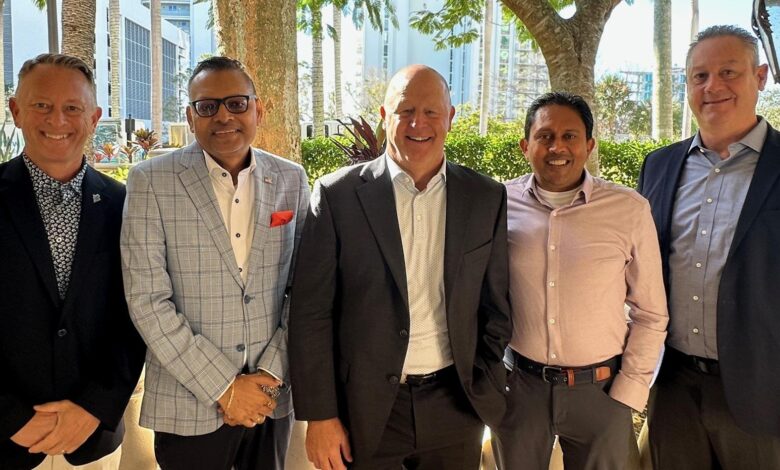
This panel was moderated by Greg Winey, the founder/CEO/president of NorthPointe Hospitality Management. His panelists were Insignia Hospitality Group President Darpan Bhakta; Chris Green, who retired last spring as president of Remington Hotels before unretiring to become president of Humanitarian Hotels; Bharat Patel, an owner/partner at Vue Hospitality; and Bob Spear, the COO of Staypineapple.
“Over the years and over all those experiences and all the people I’ve worked with, I’ve learned now that the most important thing I do is give back,” Winey said in his opening comments. “Everyone in this room is very successful because someone helped them along the way. Sometimes I do think we forget that. So, I wanted to talk today about giving back.
“Mentors, teachers and partners will pave the way,” he continued. “Treat them all well. You will need them dearly over time.”
GREG WINEY: The greatest transfer of generational wealth in the history of the world [is] occurring, and over the next 20 years estimates are as high as $120 trillion that will be passed on from baby boomers and Gen Xers to millennials and Gen Zers. How should hotels be pivoting now and capture this enormous spend power?
BOB SPEAR: With the change in the wealth structure, there’s a lot of people coming into the industry who don’t have the length of service and the experience we do, I think learning from them and how they came upon their wealth, and also helping to educate them on what we do and how the industry can give back. I think as different money comes into our industry, it’s important for us to be open, to welcome them with open arms, and mentor and help teach what’s been so good to us.
GW: And Chris, you have to make money to give money. So, what’s your story on that?
CHRIS GREEN: I have a strong belief that authenticity is lacking in today’s culture and that this generation craves authenticity. Frankly, they don’t get it through the fake that they see through social media and a lot of what they see in front of them. So, my secret sauce is not just knowing people, but letting them feel known, making sure that our staff and our team understands our mission, but they feel known too, that we know who they are and what their mission is in life. Because once you can connect at that level — knowing people and helping them be known — it’s easy for them to deliver. People get into hospitality for a reason, and I think over the past 15 years we tore the heart out of hospitality in a lot of places in search of ultimate profitability, ultimate bottom line, performance, crushing labor, and all those things. We’ve got the model upside down. So, when we transfer this business into the hands of this newcoming wealth, we need to transfer a healthy business that is about hospitality at its core, which is caring for others.
GW: Bingo, great answer. Darpan, what’s your thoughts on this?
 DARPAN BHAKTA: What are we doing in our industry? We’re not teaching them how to smile, how to deal with an issue, look them in the eye — all these issues have been created in the last 10, 15 years because of technology. We’re here to talk about technology to reduce certain things, to help us out, but we’re forgetting looking people in the eye, smiling and saying, “Good morning, good afternoon, good evening, and thank you.” And how do we translate that to the next generation? We have to really resonate within ourselves to deliver what hospitality was and continue forward with what it was.
GW: With the consolidation of all of these major hotel companies, it’s a blur and I have to say I’ve been through acquisitions and they’re not mergers they’re murders; it’s a culture killer often. It’s all about the almighty dollar, so I don’t disagree. This falls right into our next question: With the advent of AI becoming mainstream in almost every aspect of our business today, what are you doing as hoteliers to tap this incredible technology?
BHARAT PATEL: Leveraging technology is important. We’re in search of the almighty dollar, but you still have to have some heart to it, some face to it. So, one thing I’ve looked at is doing video kiosks. It’s not like when you go to the airport; it’s a kiosk, but there’s a person on the TV instead of an iPad, and they live chat with you. So, that’s one thing. In terms of AI, a study was done: construction and hospitality are the two lowest to adopt technology early and quicker. I have an iPhone, probably three, four years old; my son would call this a dinosaur. I’m not an early adopter, but I do believe that we have to adopt something to make life easier and better. I think the better way to adopt AI, or these upcoming technologies, is let our team figure out how they want to do it. Will AI help the general manager write the report to whoever they report to in a better, succinct fashion and more accurate? Okay, great. So then, what do they do with that extra time?
GW: We need to think about AI as actual interaction, because we’re giving people more time to be face forward, and we should be taking advantage of that. Bob?
BS: We’re trying to use AI to help hyper personalize our guests’ day by scraping all the different systems to bring all the information together for the frontline team members at the right time. So, if you give a front desk person information about a guest, but you give it to them at check-in, it’s probably a little too late. We’re trying to scrape all the different surveys you’ve given over time, everything you’ve given through the guest journey from the time you made the reservation, and really focusing on zero party data — data that you’ve given to us directly, rather than third party data or second party data. Over time, you’ve given us enough information and it’s sitting in our system somewhere, [and it needs to be] in the hands of the front desk person a week in advance so that they can plan for your stay and plan for your personal interests. And also using that for our team members so we can personalize their work experience; we should know what grade their children are in and how they’re doing in school, and things like that, and you can only do that by sitting down and talking to them. AI can be creepy if you take information that’s not given to you; there’s a very fine line on how we should use AI data, in my opinion.
GW: Darpan, you go next.
DB: In our organization we just hired, about a month ago, a consultant to help us understand AI and use it for our leadership team. My concern with AI is the younger generation; we’re talking about [the] younger generation coming into our business. We all have challenges, we’re really growing generations into our business and growing them up the ladder, but I’m not sure if they’re going to be able to write a basic letter. I’m not sure if they can do basic math, do a spreadsheet pro forma. We’re all talking about the spreadsheet analysts are going away, but if they don’t know where the numbers come from — if you think about algebra and stuff that you learn in high school, it’s not because you want to be a mathematician when you get older; it’s about your critical thinking skills. And we’ve got college kids coming out that can’t write a letter. That’s what I’m worried about.
 CG: I love AI. I think it’s incredible. None of my people are losing their jobs because of AI. They’re just getting more time back to do what we love, which is staring at our guests face to face and saying, “Hello, good afternoon, good morning.” One specific example, we [did] 273 weddings this year at our resort in Plymouth, Michigan, which is a lot of weddings, and we have streamlined contracting, tour process; if you call in and leave a voicemail, AI will read the voicemail, prepare a proposal, send back video and have it all ready so that the sales manager only has to hit click to send it. So, imagine how much time you’re getting back to actually take care of that bride and groom. AI is an incredible tool, but it is not hospitality.
GW: Chris, what’s the biggest leadership lesson you’ve learned from merging hospitality with philanthropy?
CG: Even though we give all our money away, we still hold very high standards, keep our hotels in excellent shape, so that the core of hospitality — great people, great service, great product, well done, well delivered — nothing changes; [if] you’re giving it away, it just makes it more fun. The fundamentals are the same.
GW: Bob, what’s the biggest operational blind spot most hotel brands overlook?
BS: I would say thinking the system can fix everything. It is about people and authenticity, and you can’t take that out of the hospitality industry. So, really focus on the teams.
GW: Bharat, what’s the one lesson you’d share with first-time hotel owners besides, “Don’t”?
BP: I think being relentless. The great thing about our industry, every day you wake up there’s some sort of fire somewhere, right? There’s something that you can help with. And that’s what I’ve loved about this industry. This industry isn’t for everyone, but for those who want a challenge in life I think this is it. You’re a teacher or you’re counselor, you’re mentor — you’re all kinds of things to your team, and what I love about our business is the people and humanity.
GW: Darpan, what’s the one strategic pivot that changed the trajectory of Insignia?
DB: When you start with zero and you grow to scale, one pivot we did about 11 years ago is get my brother and I off the day-to-day running the company quote, We promoted an individual who’s been with us at that time, 10 years, to the chief operating officer, and she actually runs our organization, leaving us time to be able to grow our organization. That was our big pivot.




Get involved!
Comments