BITAC Food & Beverage 2026: SCM Strategies
By Jacqui Barrineau | February 27, 2026
Strategic Cost Management (SCM) is no longer a back-office function for hospitality leaders trying to shore up guest experience while facing volatile costs and fragile supply chains. At a session on SCM at the recent BITAC® Food & Beverage 2026, industry executives made the case that procurement today is less about squeezing pennies out of line items and more about maintaining the guest experience while keeping owners solvent.
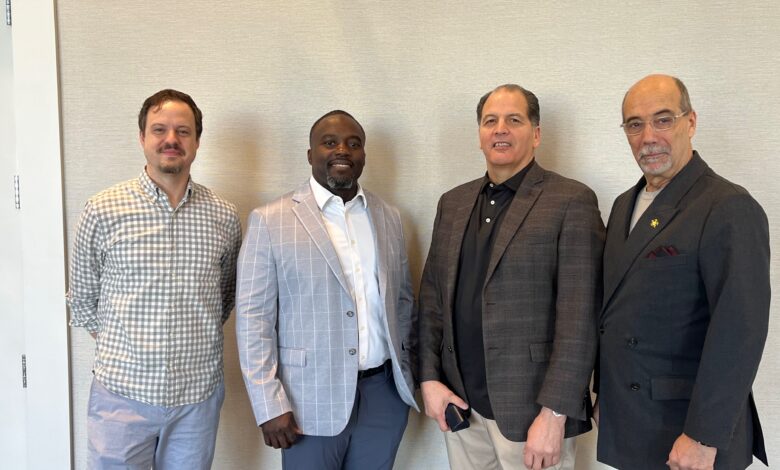
Nick Bellini, a networking expert who consults with Forbes Travel Guide, moderated the discussion between three operators with deep, and very different, operating histories:
- Adam Butts, who leads procurement for Crescent Hotels as senior vice president, after earlier stints at Northrop Grumman and e-procurement pioneer PurchasePro.
- Anthony Nieves, a longtime supply chain and procurement executive who spent 27 years at Hilton Worldwide, rising to chief procurement officer and senior vice president, and now runs a consultative procurement company, ProcureLogic, LLC.
- Nate Weir, director of culinary at Teriyaki Madness, a rapidly growing fast-casual franchise concept that recently opened its 200th restaurant.
Despite their diverse backgrounds, they had the same message for hotels and restaurants in both branded and franchised environments: Cost management must be strategic, data-driven and guest-centric.
Redefining SCM: Beyond the Line Item
Asked what strategic cost management means today, Nieves challenged the industry’s long-standing habit of treating cost as a simple commodity question. He says many operators still default to: What does this product cost per unit? But, according to Nieves, that view is incomplete. He says he views SCM as everything that touches the product and its impact on the enterprise.
That includes product price and volatility; the labor required to execute and support it; operational efficiencies and inefficiencies; reconciliation and payment processes; and logistics and the reliability of supply chains.
“It entails everything, all the variables that go into that total cost of ownership,” he said, noting that macroeconomic forces — including a forecast 2.4% GDP growth and a weak manufacturing output — affect the cost picture as much as any unit price on a spreadsheet.
Butts expanded on that perspective from the hotel side. He explained that at Crescent, procuring to the lowest price is explicitly off the table because every decision must work for the guest, the brand and the owner.
“We can’t just look at price,” he said. “What about the value? We’ve got to look at logistics behind it, risk mitigation … consistency and quality.”
With hundreds of operators operating in the field, Butts says, compliance becomes an essential part of SCM: The organization must ensure properties buy the right products from the right vendors if they want negotiated savings and brand standards to stick.
Weir, who works in a 200-plus unit, predominantly franchised fast-casual system, says he applies the same principle to a very different footprint. Most Teriyaki Madness franchisees own one or two shops.
“These are not necessarily sophisticated operators,” he said. Even so, guests expect the food to be the same in Florida as it is in Seattle. That expectation forces his team to think strategically about risk management and brand consistency, all within a structure that franchisees can actually execute.
In other words, SCM is now as much about designing simple, reliable systems for non-experts as it is about shaving basis points off a contract.
Tariffs and Trade: Design for Volatility, Not Stability
No conversation about cost management in 2026 can ignore tariffs. Bellini raised “the dreaded T word” and asked how they are affecting real-world strategies.
Weir described tariffs as a moving target that has forced Teriyaki Madness to reconsider sourcing footprints and shipping routes. For example, items such as paper bags now come from Singapore as part of a broader effort to diversify away from single-country dependency. The brand leans into its suppliers’ global expertise.
“It illustrates the importance of good partners throughout your supply chain,” he said.
Manufacturers and vendors are wrestling with tariffs, and some are exploring new plants in the U.S. or Mexico. Weir says that Teriyaki Madness has so far avoided catastrophic outages by investing heavily in Plan B scenarios and alternative sources.
Nieves broadened the view to geopolitics. He emphasized that tariffs function as a negotiating tool, with reciprocal actions and constant flux. Reshoring and rerouting supply chains may look straightforward on paper, but they require extensive planning.
“Reshoring is not something that happens overnight,” he cautioned, estimating that major route shifts can take three months to several years, depending on the commodity and complexity of the manufacturing.
Adding perspective from the hospitality industry, Butts noted that for OS&E and FF&E, much of which is imported, tariffs have turned cost estimation into a guessing game.
“Construction may take a year or two. Well, I don’t know the exact cost when it’s time to put in certain things due to the tariffs,” he said, noting examples where rates on some imports from China reached triple digits. His team responded to the fluctuations by deliberately adding some cushion into budgets, reducing the risk of having to go back to owners later with higher-than-expected costs.
COVID-19 had already forced him to think in terms of contingency, and tariffs have solidified that habit. Whether through warehousing, alternative countries, or overbudgeting, Crescent’s approach accepts volatility as a permanent feature of the environment.
AI Has Entered the Chat
As operators navigate the uncertainty wrought by tariffs, another variable is emerging: AI. Bellini invited the group to discuss how AI is reshaping procurement and cost management.
Nieves pointed out that AI has been part of procurement systems for a while, but broader utilization still lags. He sees predictive AI as the most promising area for cost management, particularly in demand forecasting and commodity planning. Instead of manually crunching seasonality, economic and supplier data, Nieves said, AI can integrate multiple variables and “lessen the margin of error” in planning and sourcing.
At Hilton, his team required every strategic sourcing director to maintain a five-year plan by commodity, continually adapted as conditions changed. Nieves says AI-powered tools can make that level of scenario planning far more dynamic, especially in volatile categories.
Butts described AI in more operational terms. He says at Crescent, the introduction of AI-driven tools has fundamentally changed how he staffs procurement.
“I no longer [have] a ‘buyer’ role anymore,” he said. Instead, team members are tapped as decision-making managers focused on category oversight and suppliers rather than spreadsheets. Meanwhile, AI platforms handle much of the sourcing event mechanics and number crunching.
On the hotel side, Butts says he uses AI to:
- Analyze purchasing patterns and build more effective programs.
- Identify opportunities to standardize where chefs might otherwise demand bespoke items at every property.
- Support negotiations with both national and local vendors, particularly when owners want more local flavor without losing pricing leverage.
- Model the impact of tariffs and help answer questions like whether to “buy now” or “store” inventory.
Butts offered a sharp caveat: AI is only as good as the systems and data behind it. “It’s garbage in, garbage out,” he warned. If you don’t have the right infrastructure and data discipline, AI won’t help achieve your goals.
Offering insights into franchise operations, Weir discussed AI in terms labor and operational efficiency, particularly in a fast-casual context where labor is his largest line. He noted that wages are up significantly compared to a decade ago, but skill levels haven’t kept pace.
To close some gaps, Weir and his team are exploring or deploying:
- AI-powered phone-answering systems that route calls, handle guest feedback and manage social-review responses so staff can focus on in-person service.
- A predictive platform that ties all third-party delivery channels into the back-of-house kitchen display system and dynamically adjusts promised delivery times based on real-time kitchen load. That improves the guest experience on platforms like DoorDash and eases stress on crew members.
- AI-supported training content that meets frontline team members where they are, improving consistency without massive training departments.
Weir cautioned that the market is crowded with AI offerings, and many of them are half baked. He advised operators to choose systems carefully and invest in areas where impact is measurable.
Guest Experience: Always Non-Negotiable
Economics and systems aside, hospitality remains a people business.
As a hotel executive, Butts makes sure his team regularly stays in their own properties so they can get a “guest perspective” and experience the rooms and in-room amenities firsthand. He says this gives the team reference points to consider when designers or vendors propose new solutions.
“If the guest does not enjoy it, then it is a failure,” Butts said.
Butts says that even as he pursues hospitality vendors and technologies to create new revenue streams, he still believes that a warm greeting and top-tier customer service will always “top the best TV in the room.”
Cost savings and experience are closely tied, Nieves agreed. He noted that in a tight-margin environment, there’s a temptation to sacrifice portion sizes or guest comforts. He urged operators to pursue product rationalization, value analysis, and operational efficiency in ways that maintain guest satisfaction, so they can still fund capital reinvestment and remain competitive.
On the restaurant side, Weir described guest touchpoints as “fleeting,” but no less powerful. He contrasted kiosk-heavy formats with the impact of a genuine greeting that can define someone’s perception of value and hospitality in seconds. Even guests who prefer a tech-forward experience benefit from that moment of acknowledgment.
Bellini closed the session with his own anecdote about a convenience store employee whose warmth during a two-minute interaction left such a positive impression that he would actively seek out that shop again. He said it’s a reminder that while cost strategies and technology are tools, creating meaningful experiences earns repeat visits and customer loyalty.
Stakes for Hospitality Leaders
Throughout the session, Weir characterized the current environment for restaurants and hospitality as a knife’s edge. With traffic declines over the past year and higher labor and input costs, many brands are vulnerable. At the same time, guests are ready to spend on enjoyable experiences. There’s opportunity in that tension.
Leaders who treat cost management as a core strategy rather than a back-office function will be better positioned to withstand volatility, reinvest with confidence, and compete as demand rebounds. In today’s market, it is now crucial to long-term resilience.




Get involved!
Comments