June 16, 2026 | From the Hotel Interactive Newsroom
SCOTTSDALE, Ariz. — Casino resort projects are most successful when design, procurement and operations teams are aligned from the start. Assumptions should be tested before selections are finalized. Ownership, facilities and vendors should be engaged before problems reach the job site. That was the key message from a panel of top executives at the recent BITAC Casino & Resort 2026.
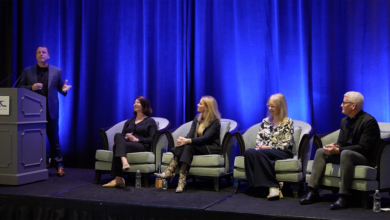
The session, “Where Design and Procurement Converge to Shape Casino Development,” was moderated by Hogan Chun, hospitality leader for Gensler’s Southwest Region and design director of the firm’s hospitality studio in Los Angeles. Top executives serving on the panel included:
- Nicole Dalton, director of interior design for Station Casinos
- Michael Armocida, director of purchasing at Desert Diamond Casino — West Valley
- Michael Grisar, senior director, resort operations, Choctaw Nation of Oklahoma
- Rick Marencic, design principal at JCJ Architecture
Chun opened the discussion by presenting casino resort development as a complex discipline that depends on decisions holding up across the full life of a project: from early design through purchasing, then through installation and into daily operations.
“It requires alignment in all three areas,” Chun said in his opening remarks. “We’ll explore how design, procurement, operations work together to create memorable guest experiences while managing budgets, schedules, supply-chain realities and long-term operational performance.”
Collaboration Starts Before Opening Day
For Grisar, the operator, that alignment has to begin well before opening day. He was quick to note that operators ultimately have to deliver the guest experience long after design and procurement decisions have been made.
“From an operator standpoint, ultimately I have to fulfill that guest experience with all of my team,” Grisar said.
That requires early coordination with architecture, design and other project partners, he said. For operators, the question is whether the final product can support service, hold up over time and meet guest expectations.
“I have to know that all of that product has that durability, it has to have the look and feel, it has to physically work,” Grisar said.
He said collaboration should begin before the team is focused on cost alone, when the concept is still taking shape and operators can give feedback on whether the property can function as envisioned.
Meanwhile, from the design side, Marencic said the first requirement is simple. “One word: time.”
Project teams have to deliver decisions “in a very timely way … and in a very direct way,” while remaining flexible enough to respond when problems arise. “You sort of have to just roll with it and be nimble and flexible,” he said.
Dalton added another dimension, noting that interior design decisions cannot be separated from the practical questions that operators and facilities teams will face later. Procurement also needs to be involved early enough to identify lead-time issues, alternative sourcing options and production realities that may affect the design.
“Interior designers [can] design these beautiful spaces, but in the end, we have to manage it,” she said.
Procurement as an Early Voice
As the conversation turned to how procurement can be engaged earlier in design, Grisar said purchasing decisions often come down to three key factors: price, quality and service.
He said a design team may choose a product because of how it looks, but procurement has to determine whether the property can get enough of that item in time.
“The design team might pick it because it looks pretty, or it has a beautiful color or fits well in that area. But again, if you can’t get 150 of them, or 250 of them at a time,” then that product won’t work for the project, Grisar said.
He added that those conversations often involve details that can affect the schedule, such as fabrics that come from a supplier that is separate from the furniture manufacturer.
“So, we’ve had phone calls, ‘Hey, Rick, they’re out of that fabric. You guys got to pick another fabric,’ because — again — the time issue,” Grisar said.
When it comes to time and scheduling, Dalton said the broader project team should be brought together early so each group can speak to its area of responsibility.
“I just think bringing in operations, procurement, ownership and the design team sequentially in the beginning is crucial,” she said. “I think that that is the most important because everybody has something different to bring to the table in regards to schedule [and] budget. How are you going to maintain it?”
Armocida said early conversations also require realism about what ownership wants, what the budget can support and where value engineering may be necessary.
“I think [in] reality checks; I think realism,” Armocida said. “A lot of times … there’s a fear of telling ownership what they need to hear [and] being able to explain from a design standpoint that may or may not be feasible.”
That means teams need to be direct about trade-offs. “If you want this, you’re either going to raise your budget, but we know how hard that at times can be,” Armocida said. “So, if there has to be a [value engineering] of a process, well, what are we getting rid of? We can’t get rid of the beds, so we have to talk about something different.”
Maintenance and Lifecycle Costs
Armocida then took his point further, turning to what the upfront choices mean over time. He said facilities teams should also be part of early conversations because the wrong maintenance approach can undermine the value of a product.
He said properties spend millions of dollars on new development, modernization and renovation, but the work can fade quickly without proper maintenance. He also expanded on how teams can unintentionally compromise a product’s warranty by mishandling it after installation, whether through improper cleaning, maintenance or other well-intended but incorrect practices.
Building on Armocida’s point, Marencic said project teams need to think about lifecycle maintenance costs before design concepts are fully developed. Designers should challenge themselves in the concept phase to think about how a space will be built and maintained, even if they do not solve every problem immediately, he explained.
“Think about what it’s going to be — how you’re going to get there,” Marencic said. “Look at the ceiling that you had a great idea for. OK, how’s that going to be made? Challenge yourself to think about that.”
When the Timing is Off
Concerns about lifecycle maintenance became more concrete when Grisar offered one of the session’s most vivid examples of what can happen when procurement and timing are not aligned.
Choctaw’s flagship property in Durant, Okla., opened a new 1,000-room tower a few years ago. Grisar explained that televisions for the project had been purchased early, but by the time the TVs moved from storage into the guest rooms, the warranty had already expired.
After the TVs were installed in the rooms, “we started to have motherboard failures,” he said. “And I lost 1,240 televisions — not six months into the opening of a tower.”
Tighter coordination between purchasing and the construction schedule could have prevented the issue, Grisar said.
Armocida offered another example from Desert Diamond, where a cocktail table at a center bar created a potential problem before opening. The table was at a height that made it easy for guests to sit on it, stand on it or put their feet on it, he said, but the top was not secured to the base.
“Called JCJ — Rick [Marencic] — and he was able to get the company out there right away,” Armocida said. “They epoxied the top onto the base, and the problem went away right before we opened.”
Marencic, from the design side, said those moments do not require conflict if the parties communicate quickly.
“You don’t need to start a war over a table,” he said. “You just need to find out, ‘Well, what can you do? When can you do it? What do you think the fix is going to be?’”
Visual communication also helped resolve the table issue.
“I made a drawing, so we [can] communicate visually, because that’s what we do,” Marencic said.
Working with Engaged Owners
Long before a guest can enjoy a casino resort’s design, the owners have to buy into it. Dalton said strong design partners understand how owners make decisions and how to present options that respond to their standards.
“The best design partners are the ones who know how the owners think,” she said.
According to Dalton, Station Casinos’ owners are highly involved in design details, from mockups and prototypes to stone dry layouts. She said some designers misunderstand that level of involvement as difficulty, when it actually reflects care and consistency.
“Our owners have done this for 50 years,” she said. “They have standards.”
Dalton described owners who can walk into a room, look at a stone dry layout from across the space and notice when it is not book matched. “They are not being difficult. They are particular, and they care. They care.”
Grisar said that attention to detail reflects the brand and organization behind the property.
“They know what they want. They’re willing to pay for the best, and knowing that anything less, they’re not going to compromise,” Grisar said. “If you don’t get it, it’s a representation of your entire organization, right?”
Avoiding Pressure Late in the Project
To meet owners’ exacting standards, Marencic said the best way to protect design quality is to start earlier. An earlier start will help when schedule, budget and procurement pressures build.
“If you start early and figure it out, you won’t have as much pressure, will you now?” Marencic said.
He said teams should bring the right people together, create a plan and move quickly when things don’t go as expected.
“Problems always occur,” he said. “What do you do? You fix it as fast as possible, but you fix it smartly, so you’re not just putting a problem on top of a problem.”
For the younger professionals who are just beginning their careers, he said his advice is straightforward.
“Don’t panic,” Marencic said. “Just put your head on and get to work. Fix it.”
The Lightning Round
In a lightning round, Chun asked each panelist to identify the single most important thing the industry can do better to align design, procurement and operations on future casino resort developments.
Grisar said purchasing teams should be allowed to use their vendor relationships and strategic alignments to help control costs and timelines.
For Dalton, the answer again comes back to timing. “Bring in the team sequentially, so that we can all start this ahead of time to stay on schedule.”
Armocida said communication is the determining factor, especially as projects grow in scale.
“Everything in life is all about communications,” Armocida said. “Everything is all about how we talk, how we explain what we’ve got from a project standpoint.”
He said the stakes are high for the work ahead.
“I’m already thinking of [what’s] next,” Armocida said. “I have a billion dollars’ worth of construction projects next year and trying to juggle them all and ensure that everything is going according to timeline.”
For project teams, he said, communication cannot be optional.
“If we aren’t communicating, we are going to fail,” Armocida said. “It’s not a matter of if; it’s when, and being able to ensure that everyone, everyone’s got a seat at the table, they know they have the invite, making sure that they come and they’re willing to share what everyone needs to hear.”
Vendors, Real-time Costs and the Last Word
Armocida’s point about communication opened into a broader discussion about vendor involvement, with Marencic making the case for better communications about costs, availability and labor.
“It’s about communicating about uncertainty,” he said.
Cost assumptions that were reliable before the pandemic have become less stable because of supply-chain disruption, tariffs and changing labor conditions, Marencic said. “In the construction industry, as well as in FF&E, we don’t really know exactly what anything really cost anymore, so the cost-data model and the metrics are sort of skewed.”
That means teams need current information on pricing, sourcing and production options, he said. Grisar added that procurement can be constrained when a vendor or sample has already been selected and there is no time to seek comparable options.
Dalton said open specifications and competitive bidding can help ownership and procurement teams evaluate options. She said Station Casinos also works to avoid construction delays by planning FF&E well ahead of installation.
“We actually order in all of our FF&E and everything ahead of time, and we don’t start construction until everything is in the warehouse,” Dalton said.
Marencic said designers also have a responsibility to talk with vendors early in the concept phase to understand the cost and lead time, and to understand the vendor’s point of view on the project. He added that teams should not rely only on online product information.
“Pick up the phone,” Marencic said. “I guess it’s an ‘old person’ thing to say, but you know what? The phone is still a method of communication.”
***
Interested in speaking at a future event? To learn more about speaking opportunities, connect with the BITAC team here.
Follow BITAC Events on LinkedIn, Instagram and TikTok for event updates and highlights.