BITAC Owners Fall 2025 Panel: Innovations and the Future Landscape of Hospitality Technology, Part 2
By Jim Nelson | December 17, 2025
 Hotel Interactive recently cohosted an executive event with our hospitality events producer sister company BITAC that catered to hotel owners from around the country. Among the several panel discussions at this event was one took on the big topic of innovations and the future of technology in the industry.
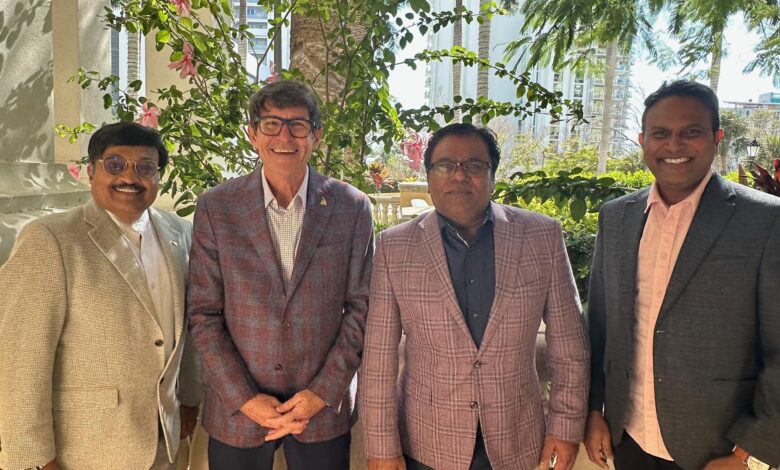
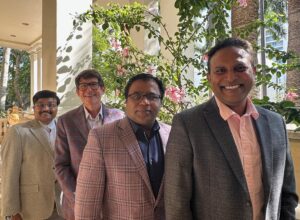
Moderated by IHRMC Hotels & Resorts CEO Jan Guantam, the panel consisted of Tom Haines, vice president of operations at Mainsail Hotels; Jean Makesh, the CEO at Okrah; and Sarona President/CTO/CIO Raman “RP” Rama.
In part 1 of this article, these panelists dove into how AI is revolutionizing service delivery from check-in to daily operations, while emphasizing that human touch remains vital. They also discussed how AI tools help teams work smarter, streamline communication, and bring formerly outsourced services (like marketing) in-house, boosting efficiency.
JAN GUANTAM: Hotels.com, Expedia, and all that, integrated their websites with AI, those kind of options, because they know exactly what the guests are looking for. Tom, what does the future of AI look like in the hospitality industry, and who do you believe will benefit the most or win in the transformation?
TOM HAINES: I think it’s going to be integrated. It’s that intersection between how you can improve the guest interaction, that human interaction, with using the tool at the same time. I have this crazy thought in my head that might be the future of a front waiter, the AI front waiter that has the knowledge that I, right now, spend six months to train somebody to do, and then they leave two months later. So, if you can train an AI waiter, not a robot — I have this thought in my head, how that gets done — and keep the human, there’s an opportunity there to enhance the guest experience, keeping the human connection and lower cost all at the same time.
JEAN MAKESH: This is what I think we’ll see happen in the next five years, 10 years, maybe the next year, two years: Let’s say that I’m going to pick a hotel chain — Marriott Bonvoy — and every single time I stay, let’s say that I go to bed at 8:00 in the night. There’s going to be something to register that I go to bed at 8:00 in the night. The way it can be done is me turning the TV off, or even a digital clock, by touching it. And let’s say that when I go to bed, I like it cold, so I’m going to drop my temperature down to 65; it’s going to record that. And then I get up at 5:00 in the morning, and it’s going to see the first thing that I do, use the bathroom, the water dripping through the faucet, there’s something that’s going to record that. And when I say the word “record,” I’m talking about “memorize.” I’m a runner, so I’m going to get up in the morning, go for a run and come back. And the first thing I do is I turn my coffee machine on. So, it knows that I’m out — my Apple phone is keeping track of that — I come back, then it knows that I’m going to turn my coffee machine on, my TV on, and I’m going to increase my temperature. What happens is, after frequent stays, every single stay for me it’ll happen: the coffee machine will turn itself on. The hot water tank will turn on and start preparing the water.
RAMAN “RP” RAMA: Hospitality has always been about human connections. We cannot remove that human connection [in] anything that we implement in AI. But it changes how we allocate our time and efforts because of what we know about the guest, their preferences, and how we need to interact with them. Imagine, instead of spending it on repetitive things, now you are in control of the data and it’s telling you how to react with each guest. Imagine if I have digital eyeglasses that send me the picture of a person that’s right in front of me and gives me all the data about that person, how am I going to serve that customer better? That’s the future. It’s going to detect you when you enter the hotel, until you leave the hotel, on everything that you’ve done. And the job of the GM or the director of sales will evolve from managing tasks to design the logic that defines great decisions, data pricing, guest feedback, and even operational insights will flow through one intelligent layer. AI won’t erase hospitality — it will reveal its essence. For the revenue manager, that might mean price that self corrects to balance profit and occupancy minute by minute. Imagine this: You are in a city, say Orlando, Florida, 130,000 rooms; AI system will say, “I have 130,000 rooms in this town. I have such and such conventions going on in such and such hotels. They are coming. So many people are flying in from out of town because they have a cruise to catch next day.” That becomes my demand. And now you have supply against it of 130,000 rooms, it’s going to scrape all the rates that are on the site and tell you where I need to position my hotel so that I’m not leaving money on the table, based on the demand and supply.
JG: How do you see AI impacting full-service hotels, restaurants, over the next few years?
RP: The full-service hotels are going to have to be very conscious because each and every consumer now is becoming price conscious; each and every person’s pocket can afford only so much. So, they’re going to have to intelligently judge a customer based on their spending logics and adjust their pricing and services according to that if they want to be successful.
JM: For restaurants and hotels, it starts with identifying the right customer and I think AI is going to help with that. For a consumer like me, it’s going to help me find the right fit for me, from a hotel or restaurant standpoint, like RP said, from pricing to personal desires. I do see that it’s a tool to help me have a better experience as a provider and also as a consumer.
TH: For full-service restaurants I see it being an aid to training because you can upload your menu, you can upload your wine list, you can upload information about allergies. AI is going to search the wine, what it pairs well with, and with food it’ll automatically pull up allergies and what you should be explaining to people. I see it as a tool, like everything else we’ve talked about; instead of printing out manuals to teach somebody — people don’t learn that way — create a tutorial for them based on all the information you give it. Make it an easy, interactive experience.
RP: We are in the business of service of human beings that have sense, feelings, and emotions. And human beings like to be served by humans who have sense, feelings, and emotions. Because it’s reciprocal. If I see somebody, I need to react based on how they are feeling to be able to be compassionate with them if they’ve had a bad day or not. AI is just a tool to make it possible to fulfill the expectations of all three stakeholders: the guest, the associates, and the owners. That’s the role of AI in the future.
AUDIENCE MEMBER: As owners, our profitability’s shrinking, our expenses are outpacing it; I know we have to adapt and we’re here to learn new things. What should [we] already be participating in and what should [we] think of putting in our map for 2026 if we don’t already have it?
TH: I think we’ve all said it: what we have to keep is the human touch. If we go too fast with and too far with AI we lose that connectivity. What do we need in the future? Start with AI. Every conversation you have, every new idea you have, you have to put it through the AI lens to see if there’s an application for it. I don’t have the answer for it, but I’m learning it so that when that intersection comes, I’m ready for it.
JM: In addition to that, I would say have a very radically open mindset and have someone in your system that understands technology. Right now, I can tell you, if you go to California, go to San Francisco, they are 30 years ahead of us with technology. It’s a completely different country. The tech guys are going to slowly take over, and they are.
RP: If you start implementing your AI, starting from your IP PBX system, think about somebody calling your hotel and [saying], “I would like to make a reservation,” and the AI is asking questions, getting answers all the way to booking. Number one, you are not involving your staff members at that point, and you are getting efficiency. Number two, when they are in the hotel and the guest is saying, “I need towels and at the same time, I need a late checkout tomorrow,” or “I need one additional day to stay, and I want a reservation at the restaurant in the evening tomorrow, at 8:00,” and that function is done by AI completely, including billing the folio for the reservation, the meals, and the additional day before the night takes place. That’s the future.