Extended-Stay Hotel Demand Accelerates as U.S. Lodging Performance Improves
From the Hotel Interactive Newsroom | July 13, 2026
U.S. hotels posted year-over-year gains in May, as extended-stay properties recorded particularly strong growth in demand, room revenue and occupancy.
Overall U.S. hotel occupancy reached 65.7% in May, up 0.6% from a year earlier, according to a recent CoStar report. Average daily rate increased 3.4% to $168.51, while revenue per available room rose 4% to $110.76. Twenty of the 25 largest hotel markets reported RevPAR growth.
During the same period, extended-stay hotel demand increased 6.2%, the segment’s largest monthly gain since February 2022, according to The Highland Group’s May 2026 U.S. Extended-Stay Hotels Bulletin.
The Highland Group reported the segment’s room revenue rose 7.9% year over year, marking the second-largest monthly increase since March 2023. Extended-stay occupancy reached 76.7%, compared with 75.8% in May 2025. Extended-stay occupancy was 12.2 percentage points higher than the average for comparable hotel classes.
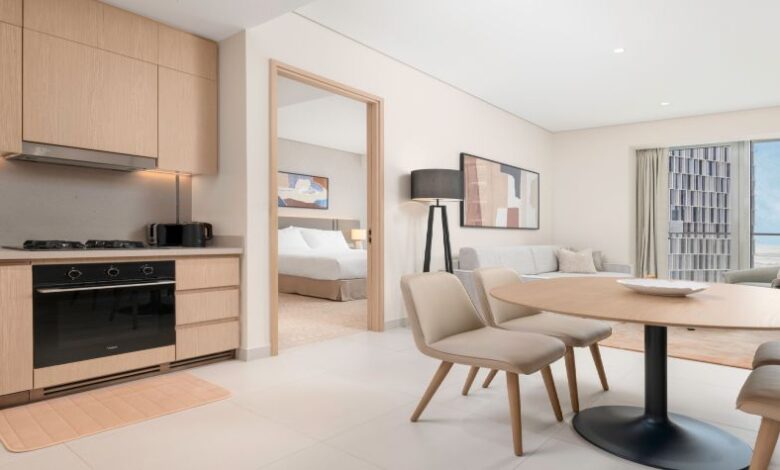
Douglas Artusio, chairman and CEO of Dellisart Hospitality LLC and founder and chair of Extended Stay Lodging Association, said extended-stay hotels are drawing more guests for stays of four to seven nights, rather than only the weeks-long stays that are traditionally associated with the segment. Artusio said Dellisart is seeing demand come from both leisure and business travelers, as families in particular are attracted to larger rooms with kitchens, laundry facilities and the flexibility to maintain more of their normal routines while traveling.
The leisure and business travelers “want a better room,” he said. “They know an extended-stay property offers that.”
He said he doesn’t see the trend limited to a particular group of travelers, but he did note major events are contributing to longer bookings. In California, Dellisart saw tourism related to the FIFA World Cup turn some stays that might ordinarily have lasted three or four nights into weeklong bookings.
Supply also continued to grow, as extended-stay room nights available increased 4.9% from May 2025. However, The Highland Group reported that the number of extended-stay rooms under construction is declining. The firm expects the segment’s total supply increase for 2026 to remain below its long-term annual average.
The outlook comes amid modest projected supply growth for the broader U.S. hotel industry. Earlier this year, Lodging Econometrics forecast 682 new hotels with 77,323 rooms to open during 2026, representing a 1.4% increase in supply. An additional 750 hotels with 81,199 rooms are forecast to open in 2027, also representing a 1.4% supply increase.
As demand grows faster than supply, Artusio said he expects extended-stay hotels to have a strong second half of the year. He also sees room for additional development as extended-stay properties attract travelers who might otherwise have chosen traditional limited-service hotels.